
Storing Montessori Toys & The Benefits of Non‑Electric Play
A beautiful play space helps children respect their toys and focus on learning. Montessori classrooms follow the principle of “a place for everything and everything in its place,” and you can apply the same idea at home.
How to Store Montessori Toys
- Use low, open shelves: Place a few carefully chosen toys on open shelves at your child’s eye level. This allows toddlers to see their options and choose independently. When they’re finished, they learn to return each item to its place, reinforcing order and responsibility.
- Offer baskets and trays: Montessori materials are often presented on trays or in small baskets. A basket for wooden blocks or a tray for our Rakibo Color‑Sorting Toy keeps all the parts together and makes it easy for a child to carry their chosen activity to a workspace.
- Rotate toys: Too many options can overwhelm toddlers and reduce focus. The Playroom Collective notes that children engage more deeply when there are fewer, high‑quality toys available. Store some toys out of sight and switch them out every week or two to maintain interest.
- Keep it simple and beautiful: Choose shelves and baskets made of natural materials to create a calm atmosphere. Avoid overcrowding; leave space between each activity so your child can clearly see and handle each one.
- Care for the materials: Wooden toys like our color‑sorting tray should be wiped with a damp cloth and dried thoroughly. Avoid soaking them in water or leaving them outdoors where moisture can warp the wood. Teach your child to handle the materials gently – respect for their toys translates to respect for their environment.
Why Non‑Electric Toys Are Better for Toddlers
Many modern toys flash, beep and sing, claiming to be “educational.” However, research and professional organizations caution against these distractions. The Playroom Collective cites Zero to Three’s warning that “the more a toy does, the less your child has to do”. When a toy entertains on its own, children become passive observers rather than active participants. This limits opportunities for creativity, language development and problem‑solving.
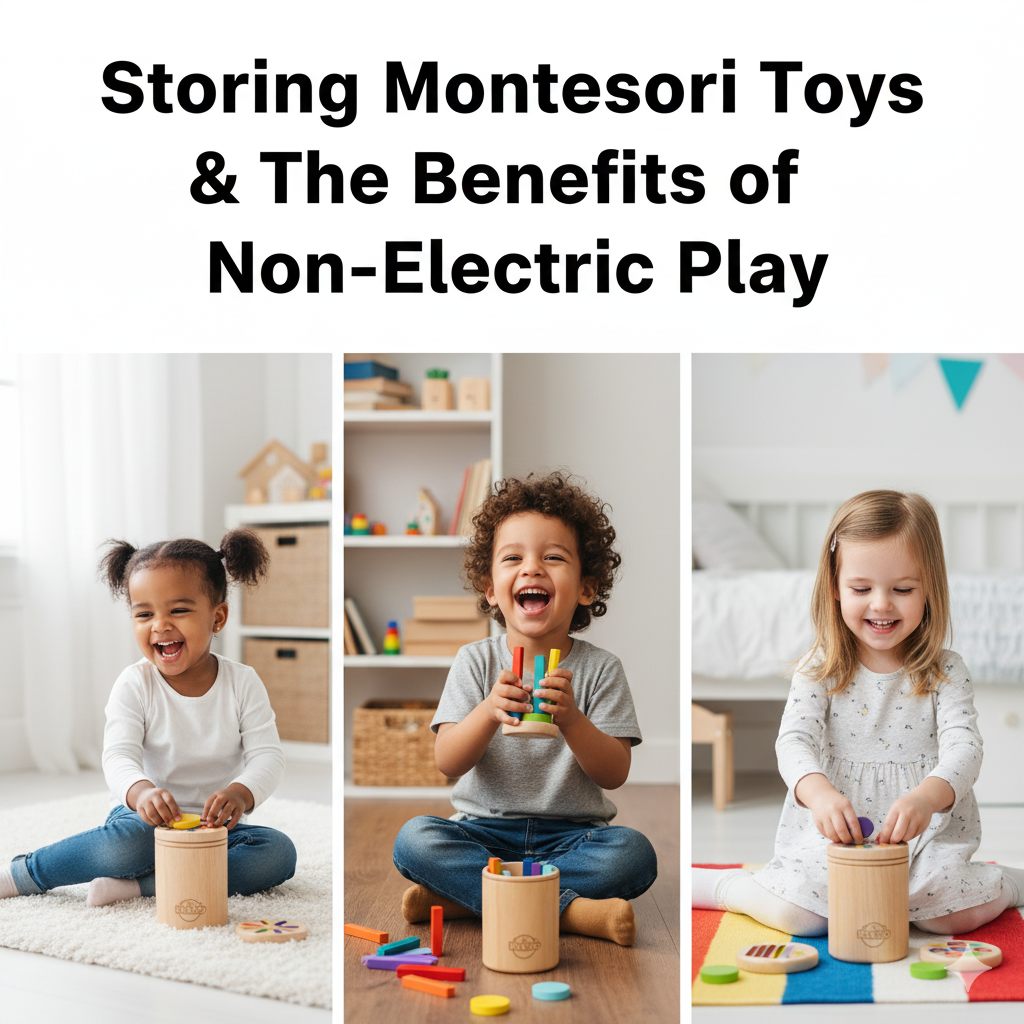
In contrast, simple, non‑electric toys encourage toddlers to use their imagination and bodies. When a child builds a tower of blocks or sorts colorful discs, they’re developing fine motor skills, concentration and critical thinking.
The American Academy of Pediatrics recommends toys that promote pretend play, problem‑solving and caregiver–child interaction. These qualities are often missing from battery‑operated toys.
Our Rakibo Montessori Color‑Sorting Toy embodies these principles. It has no flashing lights or sounds – instead, children must actively engage by picking up discs, matching colors and counting. The toy’s self‑correcting design ensures that they can identify and correct mistakes on their own. Not only does this foster independence, it also builds confidence and intrinsic motivation.
As a small, family‑run, American‑owned business, Rakibo is committed to bringing smiles to kids by offering toys that are safe, educational and truly engaging. We hope these tips inspire you to create a calm, organized play space and choose toys that let your child’s imagination and curiosity flourish.